Journal
Behind the Scenes: How Many Hours Does One Crochet Doll Take?
From magic ring to the final stitch, here is how long one amigurumi takes in our studio, and why handmade crochet dolls can’t be as cheap as factory toys.
Lovely Admin·Published ·5 min read
“Why is your crochet doll Rp 225.000 when there are ones on the marketplace for Rp 50.000?” We get this question on WhatsApp quite often, and we’re always happy to answer it. The answer isn’t expensive yarn. It’s something you can’t see in a photo: time.
In this post we walk you through making one amigurumi doll, about 25 cm tall, in our studio, step by step, with time estimates.
Time estimate for one 25 cm doll
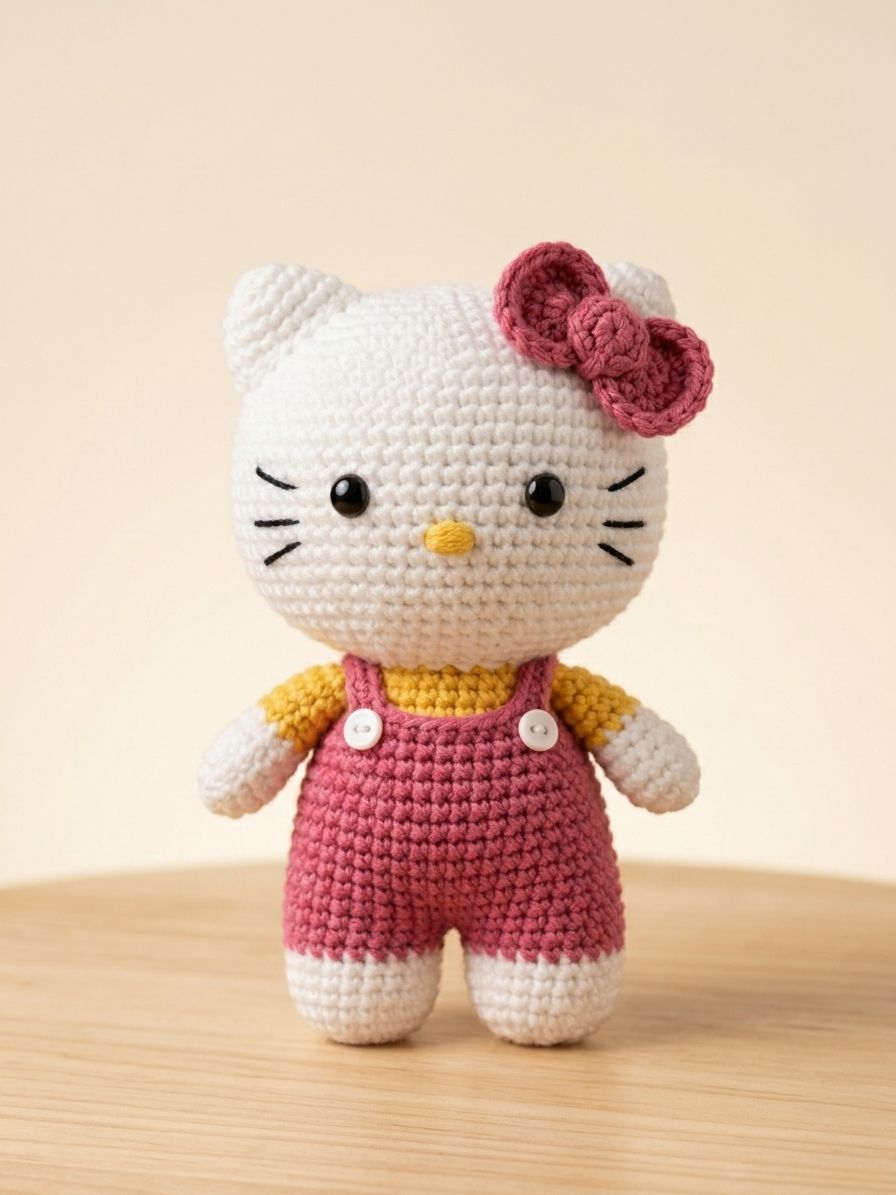
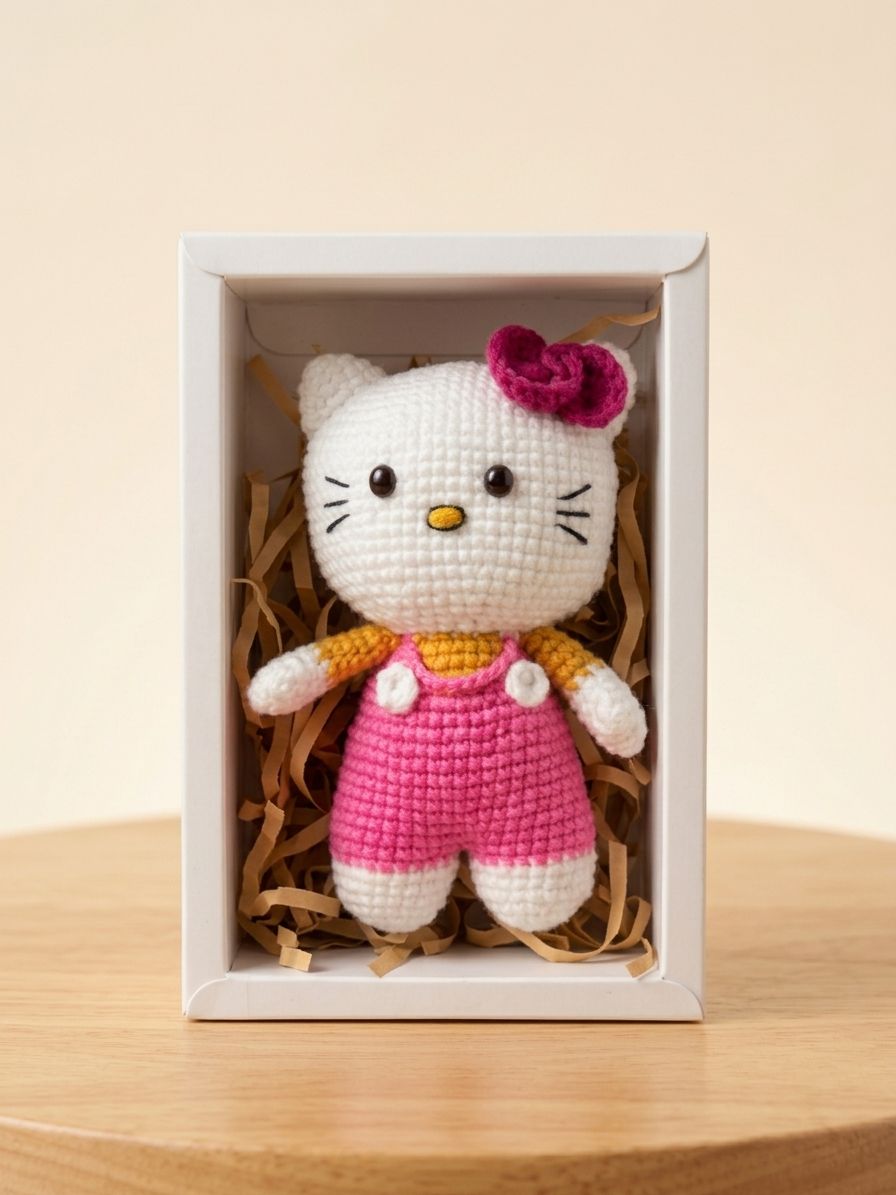
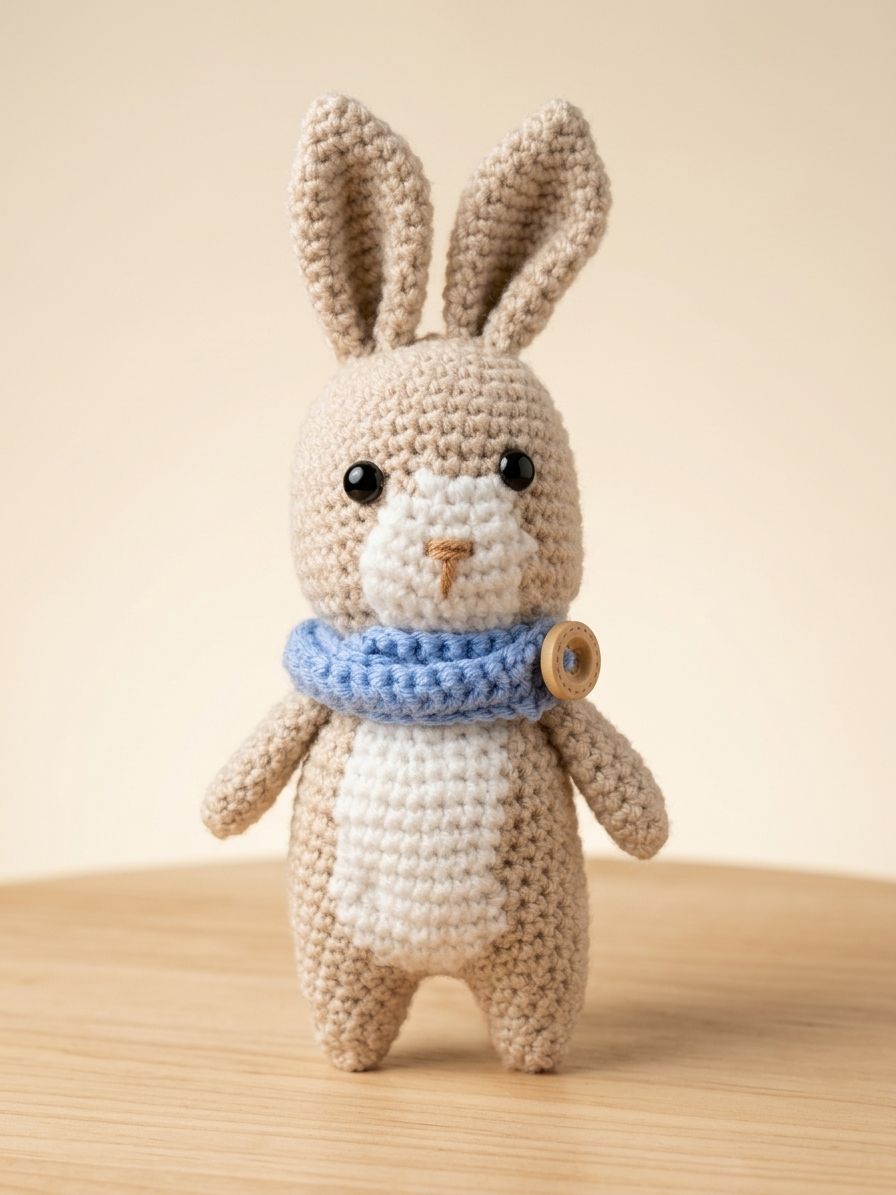
The figures below are estimates for an amigurumi of about 25 cm, like our bunny or Hello Kitty. They vary with the level of detail and the maker.
| Stage | Estimated time |
|---|---|
| Pattern, yarn prep and sizing | 30–45 minutes |
| Head | 2.5–3.5 hours |
| Body | 2.5–3 hours |
| Two arms and two legs | 2–3 hours |
| Ears, muzzle and belly | 1–1.5 hours |
| Stuffing and shaping | 45–60 minutes |
| Sewing everything together | 1.5–2.5 hours |
| Face, accessories and finishing | 1–2 hours |
| Total | about 12–18 hours |
Worked for 3–4 hours a day around other tasks, one doll takes about 4–5 days. That’s why our custom dolls are pre-order, with a 7–14 working-day lead time.
Stage 1: Pattern and preparation
Before the yarn ever touches the hook, we do the maths. How many rounds does the head need to be in proportion with the body? Which colour is the main one and which is the accent? For custom orders, this stage includes a sketch you approve.
We also choose a hook half to one millimetre smaller than the yarn suggests. That makes the fabric denser so the stuffing doesn’t peek through the stitches. The result is neater, but the hands work harder and progress is slower.
Stage 2: The head and body
The head is the biggest part and defines the doll’s character. Everything starts with a magic ring of 6 single crochet, then grows round by round: 12, 18, 24, 30, 36, up to 54 stitches at the widest round.
Counted up, a 25 cm doll’s head contains around 1,500 to 2,000 single crochet stitches. The body has about the same. Each stitch takes several hand movements, and every round has to be counted so the shape stays symmetrical.
Stage 3: Arms, legs and small parts
Small parts look quick but often take the longest. Four limbs have to be exactly the same size. Ears have to match. The muzzle and belly are in a different colour, which means yarn changes and more ends to weave in.
Stage 4: Stuffing and shaping
Stuffing sounds trivial, but it decides whether a doll looks firm and well proportioned or limp and lumpy. We stuff a little at a time while working the decreases, then press and shape by hand. The head gets stuffed more firmly so it doesn’t flop forward.
Stage 5: Sewing
This stage takes the most patience. Every part is hand-sewn to the body with a tapestry needle and matching yarn, so the seams almost disappear. We double-stitch the points children pull most, like ears and arms.
Before sewing, all the parts are pinned in place and checked from several angles. An ear that’s a few millimetres off can change the doll’s whole expression.
Stage 6: Face and finishing
The face brings the doll to life. For children over three, we fit plastic safety eyes with locking backs inside the head before closing it. For babies, the eyes are embroidered in yarn, which takes longer but is much safer.
Then comes embroidery for the nose and mouth, blush on the cheeks, and accessories like a bow tie. Finally we test every seam by gently tugging each part, and trim any stray fibres.
So why aren’t handmade crochet dolls cheap?
Here’s some simple maths. If a doll takes 15 hours of work and we want the maker to earn a fair hourly wage, Rp 225.000 is already a slim margin once you subtract yarn, stuffing, safety eyes, packaging and other costs.
Very cheap crochet dolls usually have one of these traits:
- They’re made with thick yarn and a big hook, so they’re quick, but the stitches are loose.
- They’re much smaller than they look in the photo.
- They’re mass-produced with very low wages for the makers.
We’re not saying every cheap doll is bad. But if you want a doll that survives years of hugs, dense stitches and double seams are a time investment you can see. There’s more on judging quality in handmade vs machine-made crochet.
What about other pieces?
For comparison, here are rough estimates for other pieces in our collection.
- Puppy keychain: 3–4 hours.
- 5-tulip bouquet: 6–8 hours.
- Small husky: 9–11 hours.
- Penguin with hat and scarf: 10–14 hours.
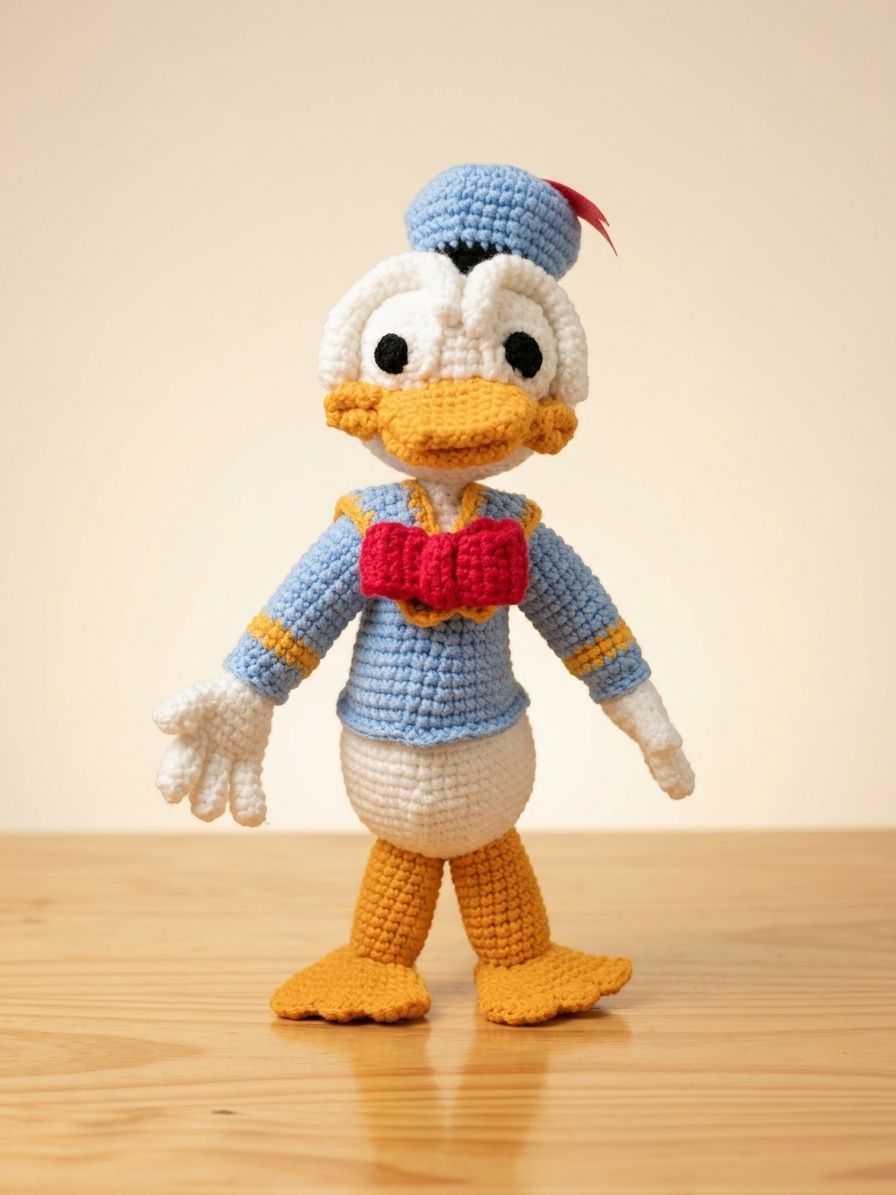
- Donald Duck: 14–18 hours.
In short
Whenever you hold a hand-crocheted doll, you’re holding a dozen or more hours of focus, thousands of stitches counted one by one, and lots of small decisions about shape and expression. That’s what makes a handmade doll feel different from a factory toy.
If you’d like a doll made for someone special, browse our amigurumi collection or start a custom order.